

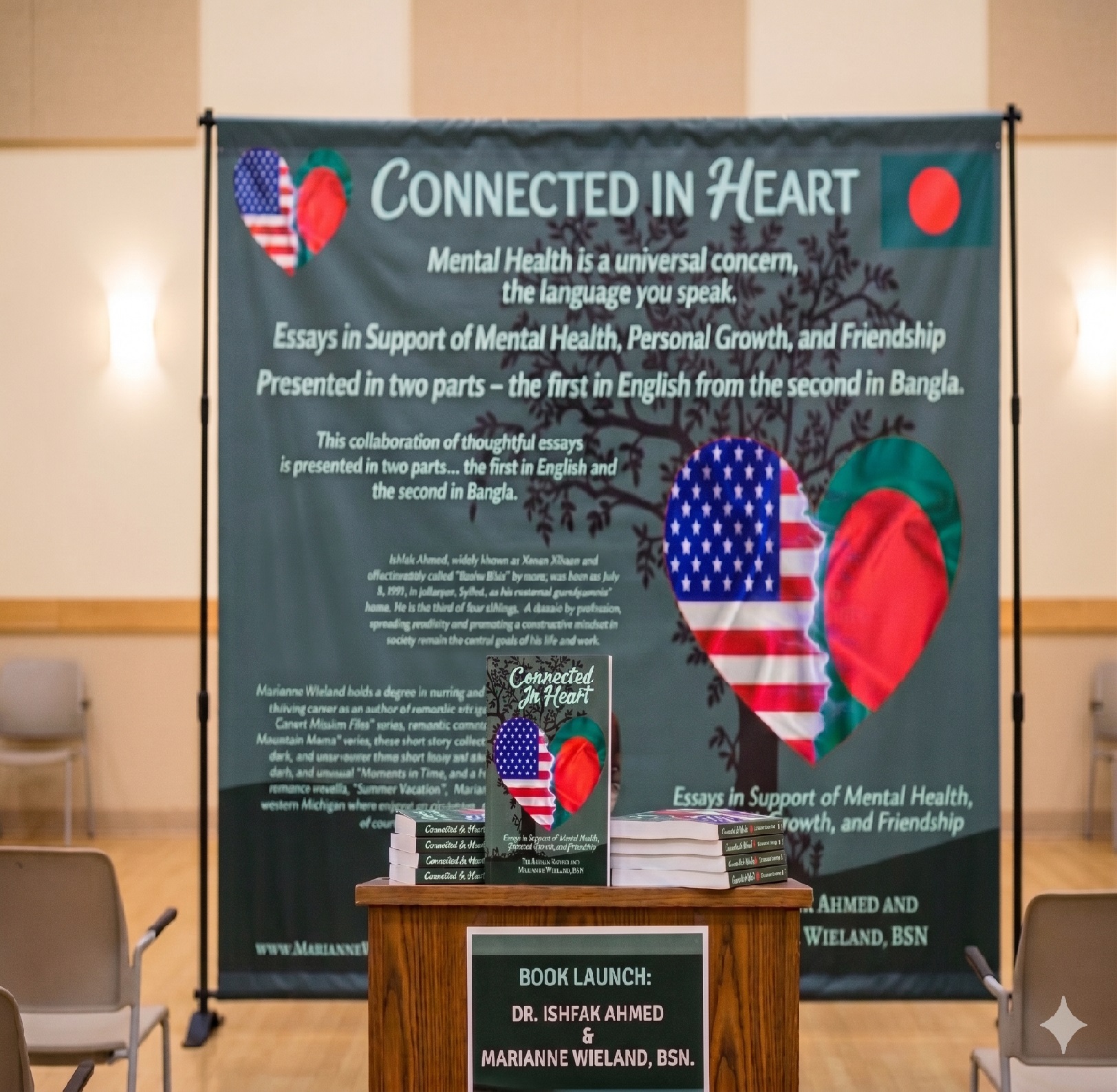
SYLHET / MICHIGAN — In a groundbreaking literary partnership that spans continents, Dr. Ishfak Ahmed (Bangladesh) and Marianne Wieland, BSN (USA), have released a comprehensive collection of essays titled “Connected In Heart.” This bilingual publication aims to dismantle the stigma surrounding mental health and provide a roadmap for personal growth across different cultures.
A Multidimensional Look at Human Struggles
The book, as outlined in its detailed table of contents, serves as both a medical guide and a social commentary. It addresses some of the most sensitive and pressing issues facing modern society:
- Sexual Trauma & Safety: A significant portion of the work (spanning seven detailed articles) is dedicated to Sexual Abuse and Situational Sexual Abuse. It further explores the legal and ethical nuances of Rape vs. Consensual Relations, providing clarity on topics often shrouded in silence.
- The Digital Impact: The authors tackle the modern epidemic of Pornography through a five-part series, examining its effects on the psyche and relationships.
- Mental Health Disorders: From Depression and its physical health impacts to the complexities of Grief and Suicide, the essays provide a compassionate look at the “Silent Victims” of mental torture.
- Resilience: Sections on Triggers and Adversity offer readers practical perspectives on overcoming life’s psychological hurdles.
The Authors Behind the Mission
The collaboration brings together two distinct yet complementary backgrounds:
- Dr. Ishfak Ahmed (Xenon Xihaan): A dentist by profession from Sylhet, Bangladesh, Dr. Ahmed is known for his commitment to spreading positivity and fostering a constructive societal mindset.
- Marianne Wieland, BSN: A Michigan-based nurse and established author, Wieland brings clinical expertise and a deep narrative style to the project.
“Mental Health is a universal concern, no matter the language you speak,” the authors state in the book’s introduction.
Bilingual Accessibility
Understanding that language should never be a barrier to healing, the book is structured in two parts: English and Bangla. This ensures that critical information on topics like “Jagoranbodh” (Awakening) and mental health can reach a diverse audience, from the streets of Dhaka to the suburbs of the United States.